
Langtang Valley Trek
From the forests of Langtang to the 4,773-meter summit of Kyanjin Ri: a true Himalayan trek just a few days’ journey from Kathmandu.

Departure
Kathmandu

Season
Mar – May
Sep – Nov

Duration
9 days
Difficulty
Easy

Daily km
10-15 km

Max Altitude
Kyanjin Gompa
3,870 m
(optional climb to Kyanjin Ri at 4,773 meters)
on request
Our guide
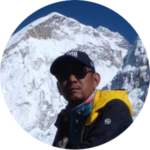
Dolam Magar
Day 01: arrival in Kathmandu, transfer to the hotel, safety briefing and gear check.
Day 02: jeep transfer from Kathmandu to Syaphru.
Day 03: trek from Syaphru to Lama Hotel (6-7 hours).
Day 04: trek from Lama Hotel to Langtang Village (4-5 hours).
Day 05: trek from Langtang Village to Kyanjin Gompa (3-4 hours).
Day 06: acclimatization day at Kyanjin Gompa with optional scenic hike to Kyanjin Ri (4,773 m).
Day 07: trek from Kyanjin Gompa to Lama Hotel (6-7 hours).
Day 08: trek from Lama Hotel to Syaphru (5-6 hours).
Day 09: jeep transfer from Syaphru to Kathmandu.
Request more information
- Transfers: Arrival and departure transfers from Kathmandu international airport.
- Accommodation in Kathmandu: 2 nights in a 3-star hotel in a double room (single on request) with breakfast (vegetarian and vegan options available).
- Bus or jeep connection to Syabrubesi
- Accommodation during the trek: Overnight stays in family-run lodges.
- Breakfast during the trek: breakfast at the lodge (vegetarian and vegan options available), including tea and coffee.
- Drinking Water: 2 liters of boiled water per member per day, to be carried in water bottles or thermoses.
- Guide: Certified local guide with excellent English and, where available, Italian.
- Porters: 1 porter for every 2 trekkers to carry personal luggage during the trek, up to 13 kg per participant.
- Duffel Bag: Duffel bag for carrying luggage during the trek (delivered in Kathmandu).
- Permits: All permits required for the Langtang Valley, including TIMS and the Langtang National Park entry permit
- Insurance: Insurance for all Nepalese staff involved.
- Medical Kit: First aid medical kit
- International flight to and from Kathmandu
- Nepal entry visa: ($30 for 15 days)
- Additional overnight stays in Kathmandu: in case of early arrival or delayed departure, or in case of an early return from the trek (for any reason) compared to the planned itinerary.
- Single room in Kathmandu: you can request a quote for a single room with a supplement of about €25 per night.
- Lunches and dinners in Kathmandu: you can request a quote for full board.
- Lunches and dinners during the trek: you can request a quote for full board with a supplement of about €25 per day.
- Insurance: Travel and high-altitude insurance, accident, medical, and emergency evacuation coverage.
- Personal Expenses: Nepali SIM card, soft drinks, alcoholic beverages, personal gear, souvenirs and other purchases.
- Tips
- Other Costs: Any item not listed in the “What’s Included” section.
What to expect in the Langtang Valley

Our experience at your service for the Langtang Valley trek
- Mountain boots or trekking boots: sturdy and comfortable for rough terrain.
- Mountain socks: enough pairs for a daily change.
- Merino wool or synthetic base layers: including long-sleeve tops and long pants.
- Breathable mid layer: for extra thermal insulation.
- Technical underwear: designed to keep the body dry.
- Waterproof jacket with hood: for protection against wind and light rain.
- Waterproof over-pants: breathable and water-resistant.
- Insulated jacket with hood: high thermal capacity for extreme cold.
- Insulated technical pants: for full protection against rain and snow.
- Thermal top and leggings: comfortable for freedom of movement.
- Lightweight breathable gloves: for warmer days.
- Insulated-lining gloves: for colder, windier conditions.
- Winter hat: made of wool or synthetic material.
- Sun hat: to protect against strong sun.
- Sunscreen: SPF 50 or higher
- Sunglasses with UV protection: essential against the intense solar radiation at high altitude.
- Backpack: waterproof and lightweight, suitable for carrying essential gear (20 liters recommended).
- Sleeping bag: rated for extremely low temperatures, down to -20°C or lower.
- Headlamp
- Universal adapter: to recharge your phone, camera, etc.
- Power bank: at high-altitude lodges, electricity is not guaranteed
- Large water bottle and thermos: at least 2 liters total
* Any missing gear can be bought or rented directly in Kathmandu.
F.A.Q. (Frequently Asked Questions)
Langtang is particularly suitable for anyone wanting a first taste of trekking in the Himalaya without tackling a two- or three-week itinerary and without necessarily going above 4,000 meters.
The trails present no mountaineering difficulties, and the trek lasts 9 days in total. You do still need to be in good health and used to walking in the mountains for several hours at a stretch.
The great advantage of Langtang is that it lets you reach a true high-mountain environment within just a few days. From Kathmandu you reach the trailhead by road, with no domestic flights, and after three days of walking you arrive at Kyanjin Gompa, at 3,870 meters, surrounded by the mountains and glaciers of the upper valley.
It’s a great option for those with limited time, who want to avoid altitudes above 5,000 meters, or who simply want to see how their body reacts to altitude before tackling a longer trek in the future.
No. Unlike the Everest region, no domestic flights are required.
From Kathmandu we reach Syabrubesi overland by jeep or bus, and the trek starts from there. The return journey is also by road.
This removes the uncertainty of mountain flights and makes Langtang one of the great Himalayan treks that’s easiest to reach from Kathmandu.
The highest point where we spend the night is Kyanjin Gompa, at 3,870 meters.
During the day spent in Kyanjin, you can optionally climb up to Kyanjin Ri, at 4,773 meters. This excursion is not mandatory: those who prefer to stay at lower altitudes can spend the day exploring Kyanjin Gompa and the upper valley.
That’s why we list both altitudes: 3,870 meters for the main itinerary and 4,773 meters as the optional highest point.
No. Climbing Kyanjin Ri is entirely optional.
It’s a demanding excursion due to the elevation gain and especially the altitude, but it offers one of the most beautiful views in the entire valley, over Langtang Lirung and the surrounding mountains.
The guide will assess each participant’s physical condition, acclimatization, and the weather. Those who don’t want to climb can stay at Kyanjin Gompa and still fully enjoy the trek.
It doesn’t require mountaineering skills, but it’s physically more demanding than the regular Langtang stages, since you reach 4,773 meters starting from Kyanjin Gompa.
The difficulty therefore comes mainly from the elevation gain and the altitude. The pace is slow, and everyone keeps their own rhythm, with no obligation to reach the summit.
Most days involve about 5–7 hours of walking.
The climb from Langtang Village to Kyanjin Gompa is shorter, while the descent from Kyanjin to Lama Hotel is one of the longest days. The route gains altitude gradually and has no technically difficult sections.
We recommend arriving at the starting point already used to 5–7 hour hikes and routes with 700–1,000 meters of elevation gain.
No specific mountaineering training is required. However, if you also want to tackle Kyanjin Ri, it helps to have good uphill stamina and to already be used to walking for several hours in a row.
The ascent is gradual: from Syabrubesi we reach Lama Hotel, then Langtang Village, and only the following day Kyanjin Gompa at 3,870 meters.
We spend two nights here. The extra day allows for acclimatization and, for those who feel up to it, a climb higher toward Kyanjin Ri before returning to sleep at Kyanjin Gompa.
Yes. Even though the altitudes are lower than on Everest, Manaslu, or the Annapurna Circuit, altitude sickness can appear starting above 2,500 meters.
Most participants only reach the 3,870 meters of Kyanjin Gompa, while Kyanjin Ri at 4,773 meters is optional. The gradual itinerary and the two nights at Kyanjin help the body adjust to the altitude.
The Tamang are the historically predominant population in the valley and have a culture with deep Tibetan roots.
Language, Buddhism, monasteries, mani walls, prayer flags, traditional dwellings, and customs tell a story deeply tied to the trans-Himalayan regions.
Langtang is therefore not just a nature trek: walking through the valley also means entering one of the areas of Nepal where Tamang identity is still especially strong.
The earthquake of April 25, 2015 triggered a massive avalanche of ice, snow and rock from Langtang Lirung, which destroyed Langtang Village and severely hit several settlements in the upper valley.
In the following years, local communities rebuilt villages, lodges and trails, and the valley once again began welcoming trekkers.
Trekking through Langtang today also means encountering a community that has rebuilt its life and economy after one of the worst tragedies in Nepal’s recent history.
Yes, although Langtang is a trek and not a wildlife safari.
Langtang National Park is home to the red panda, Himalayan tahr, musk deer, Himalayan black bear, langur and numerous bird species. The snow leopard is also present.
Spotting the most elusive species, such as the red panda or snow leopard, is very rare, though. Monkeys, ungulates, birds of prey and other animals are more commonly seen along the trail.
We recommend spring, between March and May, and autumn, from late October to November, in particular.
In spring, the rhododendron forests are especially beautiful; in autumn, conditions are generally drier and mountain visibility is excellent.
In winter, the trek is still possible, but snow and cold temperatures can make the Kyanjin Ri excursion more difficult in particular. During the monsoon, rain, clouds and wet trails make the trip less favorable.
Yes. The Langtang Trek is one of the itineraries for which current Nepalese regulations require a licensed guide and the TIMS Card.
An entry permit for Langtang National Park is also required.
Himalaya Exped arranges the guide and permits directly before the trek begins, and all the documentation required by the itinerary is included in the trip.
English is always guaranteed: all our Nepalese guides who accompany international clients speak English.
When available, we can also assign guides with a good knowledge of Italian or German. These languages, however, are not guaranteed on all departures: if they matter to you, let us know before booking and we’ll check the availability of the most suitable guide.
Yes. We ask participants to have travel insurance that covers high-altitude trekking, medical expenses and possible emergency evacuation.
Since the optional climb to Kyanjin Ri reaches 4,773 meters, we recommend a policy that covers trekking activities up to at least 5,000 meters.
In Kathmandu, we’ll give you a duffel bag to hand over to the porters. We usually plan for one porter for every two participants, with a maximum of 13 kg of personal luggage per person.
The duffel bag is carried to the next stage and will be available again once you arrive at the lodge.
It’s a concern we understand, but the issue isn’t using porters — it’s how they’re treated. Working as a porter or guide is one of the main income opportunities tied to tourism for many families in the mountain regions, and refusing to hire them on principle doesn’t necessarily help them.
At Himalaya Exped, porters are part of the team. We work with local people and guarantee decent working conditions, insurance during the trek, and clear limits on the weight they carry. We normally provide one porter for every two participants, with a maximum of 13 kg of personal luggage per traveler.
To us, responsible tourism doesn’t mean taking work away from local communities — it means making sure that work is done with dignity, safely, and with fair pay.
During the trek, you’ll only carry a light backpack, roughly 20–25 liters, with water, a waterproof jacket, a warm layer, sunscreen, sunglasses, documents, a camera, and anything else you might need during the day.
The rest of your gear travels in the duffel bag carried by the porters
Anything you don’t need during the trek can be safely stored at the hotel in Kathmandu and picked up when you get back.
Along the way, all you need is the duffel bag carried by the porters and your small daypack.
During the trek, we sleep in tea houses and family-run lodges in the valley, generally in simple double rooms.
In Syabrubesi and the lower villages, it’s easier to find rooms with a private bathroom. As you climb toward Langtang Village and Kyanjin Gompa, the facilities become progressively more basic, and shared bathrooms are common.
Our guides always look for the best accommodation available, but private bathrooms can’t be guaranteed at every stage. Rooms are generally not heated; lodges often heat the common dining room instead.
In Kathmandu, we stay in a 3-star hotel in a double room with private bathroom and breakfast included.
Yes. In Langtang Village, and especially in Kyanjin Gompa, nights can get very cold, and lodge rooms are not heated.
We recommend a sleeping bag suited to low temperatures, with a comfort rating of around -20 °C. If you don’t have one suited to Himalayan conditions, you can rent one in Kathmandu.
Himalaya Exped provides 2 liters of drinking water per participant every morning, to be carried in your own water bottle or thermos.
At the lodges, you can usually buy additional boiled or bottled water. Water straight from taps, fountains, or streams should not be drunk without first boiling, filtering, or treating it with a purification product.
Lodges offer simple but fairly varied food: Dal Bhat, noodles, soups, rice, potatoes, pasta, eggs, momo, and several vegetarian dishes.
Heading up toward Kyanjin Gompa, the choice becomes a bit more limited. Our guides tend to recommend simple, often vegetarian dishes at the more remote lodges, especially when there’s no way to be sure meat has been stored properly.
They’re not essential, but it can help to bring a few bars, dried fruit, or supplements you’re already used to using on treks.
Above all, we recommend bringing products you know you tolerate well and avoiding trying new supplements during the trek.
The trek starts at relatively low altitude and reaches 3,870 meters at Kyanjin Gompa, so temperatures change noticeably along the way.
In the early stages, days can be mild, while in Langtang Village and Kyanjin Gompa temperatures can drop below freezing at night and in the early morning, especially in late autumn and early spring.
If you climb Kyanjin Ri, wind and altitude can make the temperature feel considerably colder.
Yes. At the main lodges you can generally charge phones and cameras, although further up the valley the service may come at a cost and electricity may be less reliable.
We still recommend a high-capacity power bank, especially for your stay in Kyanjin Gompa. Cold weather also drains batteries faster.
Mobile coverage is fairly good in the lower part of the valley, but it becomes progressively weaker as you climb.
Based on experience and available coverage, we recommend a Nepal Telecom (NTC) SIM: Ncell tends to lose signal sooner, while NTC can work up to Langtang Village and occasionally even at Kyanjin Gompa. That said, you shouldn’t consider the connection guaranteed.
Some lodges also offer Wi-Fi, often for a fee, but speed and reliability can be very limited.
It’s normal to spend a few hours or even entire days without a good connection. We recommend downloading maps, documents and anything you might need offline before you depart.
For travelers arriving from Europe, there are normally no mandatory vaccinations required to enter Nepal, except in specific cases related to travel from or transit through countries at risk of yellow fever.
That said, it’s advisable to be up to date with routine vaccinations and to check with your doctor or a travel medicine clinic which vaccines are recommended for Nepal, such as hepatitis A and typhoid, based on your health status and type of trip.

