
Upper Mustang Jeep Tour
Cross the high-altitude deserts of Upper Mustang by jeep all the way to Lo Manthang, through ancient villages, Buddhist monasteries and rock-carved caves, in the heart of the last true Tibet.

Departure
Kathmandu

Season
Mar – May
Sep – Nov

Duration
12 days
Difficulty
Very Easy
Daily Distance
8-12 km

Max Altitude
Lo Manthang
3,800 m
October 31, 2026
Our guide
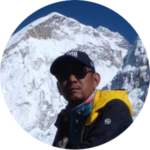
Dolam Magar
Day 01: arrival in Kathmandu, transfer to the hotel, safety briefing and gear check.
Day 02: flight transfer to Pokhara.
Day 03: flight transfer from Pokhara to Jomsom and jeep to Kagbeni.
Day 04: jeep tour from Kagbeni to Syangboche (6-7 hours).
Day 05: jeep tour from Syangboche to Charang (6-7 hours).
Day 06: jeep tour from Charang to Lo Manthang (6-7 hours).
Day 07: visit Lo Manthang, jeep tour to the Chhoser caves and the ancient village of Kimaling.
Day 08: jeep tour from Lo Manthang to Muktinath (8-9 hours).
Day 09: jeep transfer from Muktinath to Jomsom and flight to Pokhara.
Day 10: visit Pokhara
Day 11: flight transfer from Pokhara to Kathmandu.
Day 12: spare day or visit Kathmandu.
Request more information
- Transfers: Arrival and departure transfers from Kathmandu international airport.
- Accommodation in Kathmandu and Pokhara: 5 nights in a 3-star hotel in a double room (single on request) with breakfast (vegetarian and vegan options available).
- Flight connection to Pokhara
- Flight connection with Jomsom
- Jeep: private 6-seat jeep
- Accommodation during the trek: Overnight stays in family-run lodges.
- Breakfast during the trek: breakfast at the lodge (with vegetarian and vegan options), including tea and coffee.
- Guide: Certified local guide with excellent English and, where available, Italian.
- Duffel bag: Duffel bag for luggage transport during the trek (delivered in Kathmandu).
- Drinking water: 2 liters of boiled water per member per day, to be carried in bottles or thermoses.
- Permits: Special Restricted Area permit for access to Upper Mustang, including TIMS and the Annapurna Conservation Area entry permit
- Insurance: Insurance for all Nepali staff involved.
- Medical Kit: First aid medical kit
- International flight to and from Kathmandu
- Nepal entry visa: ($50 for 30 days)
- Extra overnight stays in Kathmandu and/or Pokhara: in case of early arrival or delayed departure, or in case of an early return from the trek (for any reason) compared to the planned itinerary.
- Single room in Kathmandu and/or Pokhara: you can request a quote for a single room, with a supplement of about €25 per night.
- Lunches and dinners in Kathmandu and Pokhara: you can request a quote for full board
- Lunches and dinners during the trek: you can request a quote for full board, with a supplement of about €30 per day.
- Insurance: Travel and high-altitude insurance, covering accidents, medical costs, and emergency evacuation.
- Personal expenses: Nepali SIM card, soft drinks, alcoholic beverages, personal gear, souvenirs and other purchases.
- Tips
- Other Costs: Any item not listed in the “What’s included” section.
What can you expect from the Upper Mustang Jeep Tour?

Our experience at your service, guiding you through Upper Mustang
- Trekking boots: sturdy and comfortable for rough terrain.
- Wool hiking socks: enough pairs for a daily change.
- Merino wool or synthetic base layers: including tops and long johns.
- Breathable mid-layer top: for extra thermal insulation.
- Technical underwear: designed to keep the body dry.
- Waterproof jacket with hood: for protection from wind and light rain.
- Waterproof pants: breathable and water-resistant.
- Insulated jacket with hood: high thermal capacity for extreme cold.
- Insulated technical pants: for full protection against rain and snow.
- Thermal top and leggings: comfortable and easy to move in.
- Lightweight breathable gloves: for warmer days.
- Insulated gloves: for the coldest, windiest conditions.
- Winter hat: wool or synthetic material.
- Sun hat: for protection from strong sunlight.
- Sunscreen: SPF 50 or higher
- UV-protective sunglasses: essential against the strong sun exposure at high altitude.
- Trekking backpack: waterproof and lightweight, suitable for carrying gear on day hikes (20 liters recommended).
- Headlamp
- Universal adapter: for charging your phone, camera, etc.
- Power bank: electricity is not guaranteed at high-altitude lodges
- Large water bottle and thermos: at least 2 liters total
* Any missing gear can be bought or rented directly in Kathmandu.
F.A.Q. (Frequently Asked Questions)
It’s designed for travelers who want to explore Upper Mustang without tackling a multi-day trek. Most of the journey is covered by private jeep, with only short walks along the way to visit villages, monasteries, caves, and scenic viewpoints.
You don’t need any special hiking experience, but you do need a flexible mindset: the roads are often unpaved and rough mountain tracks, and you’ll spend several nights at altitudes between 3,000 and 4,000 meters.
Mustang is very different from the Nepal you find in the southern Himalayan valleys. You enter an arid plateau, shielded from the rains by the Annapurna range, marked by canyons, eroded rock walls, small fortified villages, chortens, and ancient Buddhist monasteries.
For centuries, the Kingdom of Lo maintained strong cultural and trade ties with Tibet, and today Upper Mustang still preserves a distinct Tibetan identity in its language, religion, architecture, and traditions.
Upper Mustang lies within Nepal politically, but geographically it belongs to the Tibetan plateau. For centuries, the Kingdom of Lo held far closer ties with Tibet than with the Nepali valleys south of the Himalaya.
This history is still visible in the language, in the village architecture, in the chortens, in the Buddhist monasteries, in the prayer flags, and in the traditions of the local people. That’s why we call Mustang “the last true Tibet”: not as a geographic label, but as a way to describe a Tibetan culture that remains deeply alive here.
The Buddhist heritage is a core part of our itinerary. As we cross the Upper Mustang, we come across ancient monasteries and temples in the villages of Charang and Lo Manthang, and we dedicate a full day to exploring the valley north of Lo Manthang, between Chhoser and Kimaling, where monasteries, caves and small settlements are deeply tied to Tibetan Buddhist tradition.
This isn’t a trip where you simply watch monasteries go by from the jeep: we stop to visit them and, together with our guide, learn about their history and the role they still play in the life of local communities.
Buddhism here is more than a relic of the past. Monasteries, chortens, prayer wheels and rituals are still woven into the daily life of Upper Mustang’s villages.
Lo Manthang preserves monasteries dating back to the era of the Kingdom of Lo, and it remains the region’s most important religious and cultural center. The grand Tiji festival, held every year in the walled city, is one of the clearest examples of this living tradition: for several days, monks and residents take part in sacred rituals and dances rooted in Tibetan Buddhism.
Muktinath, at around 3,800 meters, is one of the most important sacred sites in the Himalaya, revered by both Hindus and Buddhists.
For Hindus, it is linked to Vishnu and the concept of spiritual liberation; in Tibetan Buddhist tradition, it is associated with Avalokiteshvara. Within the complex, monks, Buddhist nuns and Hindu priests coexist alongside the famous 108 sacred springs.
We reach it on the return journey from Lo Manthang to Jomsom: after several days immersed in the Buddhist culture of Upper Mustang, Muktinath offers a chance to encounter another distinctive facet of Nepali spirituality, where different traditions share the same sacred site.
Lo Manthang is the ancient capital of the Kingdom of Lo and the main historical and cultural hub of Upper Mustang.
The town is surrounded by ancient walls and is home to Buddhist monasteries, traditional houses, and an urban layout quite different from other Nepali towns. We don’t treat it as a simple stopover: we spend real time in Lo Manthang and devote a full day to exploring the surrounding valleys and villages.
Over the centuries, thousands of cavities have been carved into the rock walls north of Lo Manthang, some used as dwellings, meditation sites, burial chambers, or shelters.
During the day dedicated to the area around Lo Manthang, we head to the Chhoser area to visit some of these caves and the ancient settlements of the valley. It’s one of the places that best tells the story of just how unique Upper Mustang’s history is.
It depends on the stage, but generally we spend a few hours a day in the jeep, broken up by numerous stops in villages, at monasteries, and at scenic viewpoints.
We haven’t built this trip as a simple transfer from Jomsom to Lo Manthang: the jeep is a means of crossing the region and reaching places far apart from each other, but Mustang is best discovered by stopping along the way.
Most of the route runs along unpaved mountain roads. Some stretches are relatively smooth, while others can be very rough, dusty, and slow going, with uneven surfaces and small stream crossings.
That’s exactly why we use a jeep suited to the roads of the Himalaya and local drivers used to driving them. Don’t expect the comfort of a normal trip on paved roads: the drives themselves are part of the Upper Mustang experience.
No. The main travel is done by jeep, and no trekking days are included.
To visit Lo Manthang, monasteries, villages and caves, however, some short walks are needed, sometimes on dirt paths, with steps or small elevation changes. A normal ability to walk for a few hours during the day is enough, with no need for trekker-level fitness.
The trip runs for several days between 3,000 and 4,000 meters, reaching a maximum altitude of about 3,800 meters.
That’s much lower than the major Himalayan treks, which go above 5,000 meters, but altitude still matters, since traveling by jeep gains altitude faster than walking uphill does.
Yes. Altitude sickness depends on altitude and the speed of ascent, not on physical effort.
That’s why our itinerary reaches the Upper Mustang gradually, passing through Pokhara, Jomsom and Kagbeni before climbing toward Lo Manthang. We recommend drinking plenty of water, avoiding alcohol during the ascent, and telling your guide right away about any symptoms such as severe headache, nausea or trouble sleeping.
Spring and autumn are the times we recommend most, especially between April and May and between late October and November.
Upper Mustang lies in a rain shadow area, protected by the Annapurna range, and receives far less rainfall than the southern side of Nepal. That’s why it’s one of the few Himalayan regions you can visit even during part of the monsoon season.
Keep in mind, though, that reaching Upper Mustang still means passing through Pokhara and Jomsom, where weather and road conditions can affect flights and transfers.
Upper Mustang is one of the regions in Nepal where foreign travelers’ access is regulated through a special permit.
The system was also introduced to control the impact of tourism on a geographically isolated area with a particularly delicate cultural heritage. The Restricted Area Permit is issued through a registered trekking agency and must be carried with you throughout the trip.
Yes. To enter Upper Mustang, you need a special Restricted Area Permit issued by the Department of Immigration, along with the Annapurna Conservation Area (ACAP) permit.
Himalaya Exped arranges the guide and all necessary documentation directly before departure. The permits included in the itinerary are covered by the tour price.
English is always guaranteed: all our Nepali guides who accompany international clients speak English.
When available, we can also assign guides with a good knowledge of Italian or German. These languages, however, aren’t guaranteed on every departure: if they matter to you, let us know before booking and we’ll check the availability of the most suitable guide.
Yes. We use a private jeep for our group, rather than the shared vehicles used for local transport.
This lets us decide together with the guide where to stop, spend time in the villages and at scenic viewpoints, and adapt the day to road conditions and the group’s interests.
The construction of the road has profoundly changed the way people cross the Upper Mustang. Many stretches of the old walking route now run along or close to the track used by vehicles.
For those not specifically seeking the trek experience, we prefer to use the jeep to spend the available time in Lo Manthang, Chhoser, monasteries, villages and side valleys, rather than walking for several days along the same road.
Yes. Even though it’s not a demanding trek, you’re traveling through a remote region and reaching altitudes close to 4,000 meters.
We therefore recommend travel insurance that covers medical assistance, repatriation and any emergency evacuation for the entire stay in Nepal.
For the trip we recommend a soft, relatively compact bag, which is easier to fit into the jeep than a large hard-shell suitcase.
Anything you don’t need in the Upper Mustang can be left at the hotel in Kathmandu and picked up on your return. For day visits, a small backpack with water, a jacket, sun protection, a camera and personal items is enough.
In Kathmandu and Pokhara we stay in hotels, while in Jomsom and the villages of Mustang we use local lodges and guest houses.
In the larger towns you can often find rooms with a private bathroom; in the smaller villages of Upper Mustang facilities may be more basic, and shared bathrooms remain a possibility.
Our guides always look for the best available accommodation, but it’s important to remember that you’re traveling through a remote region: even a good facility in Lo Manthang won’t necessarily offer the same standards as a hotel in Kathmandu or Pokhara.
Lodges normally provide blankets, but rooms in Upper Mustang are generally not heated, and nights can get very cold.
We therefore recommend bringing a sleeping bag suited to the season of your trip. If you don’t own one, you can rent one in Kathmandu. Before departure, we’ll let you know the best gear for the expected conditions.
Himalaya Exped provides 2 liters of drinking water per participant every morning, to be carried in your own water bottle or thermos. In lodges, hotels, and villages, you can normally buy additional boiled or bottled water.
Water straight from taps or local sources, on the other hand, should not be drunk without first boiling, filtering, or treating it with a water purification product.
In lodges and guest houses you’ll find Dal Bhat, noodles, rice, momo, soups, potatoes, eggs, and various Tibetan-inspired dishes.
In the main towns the choice can be fairly wide, while in the more remote villages it becomes simpler. Mustang is also one of the regions of Nepal where apples, barley-based products and dishes rooted in Tibetan tradition are especially common.
The climate is dry, with big temperature swings. During the day, in the sun, temperatures can be pleasant or even warm, while evenings and nights turn cold quickly, especially near 4,000 meters.
Wind is also a defining feature of Mustang and tends to pick up in the afternoon. We recommend layered clothing, wind protection, a hat and good sun protection.
Yes. In lodges and hotels you can usually charge phones, cameras and power banks.
In more remote locations, however, power cuts or limited availability can occur. We recommend bringing a power bank anyway, especially if you use your phone or camera a lot during the trip.
Coverage is much better than it used to be, but you shouldn’t expect a constant connection.
Nepal Telecom (NTC) now has coverage along the Jomsom–Muktinath–Lo Manthang route up to the Tibet border, so we recommend getting an NTC SIM card at the airport or near your hotel in Kathmandu. Wi-Fi may also be available at the main lodges, but speed and reliability vary widely.
In side valleys and during some transfers, you may still find yourself without signal. We recommend downloading maps, documents and anything you might need offline before you set off.
Travelers arriving from Europe are not normally required to have mandatory vaccinations to enter Nepal, except in special cases related to travel from or transit through countries at risk of yellow fever.
That said, it’s advisable to be up to date with routine vaccinations and to check with your doctor or a travel medicine center about those recommended for Nepal, such as hepatitis A and typhoid, depending on your health condition and the type of trip.

